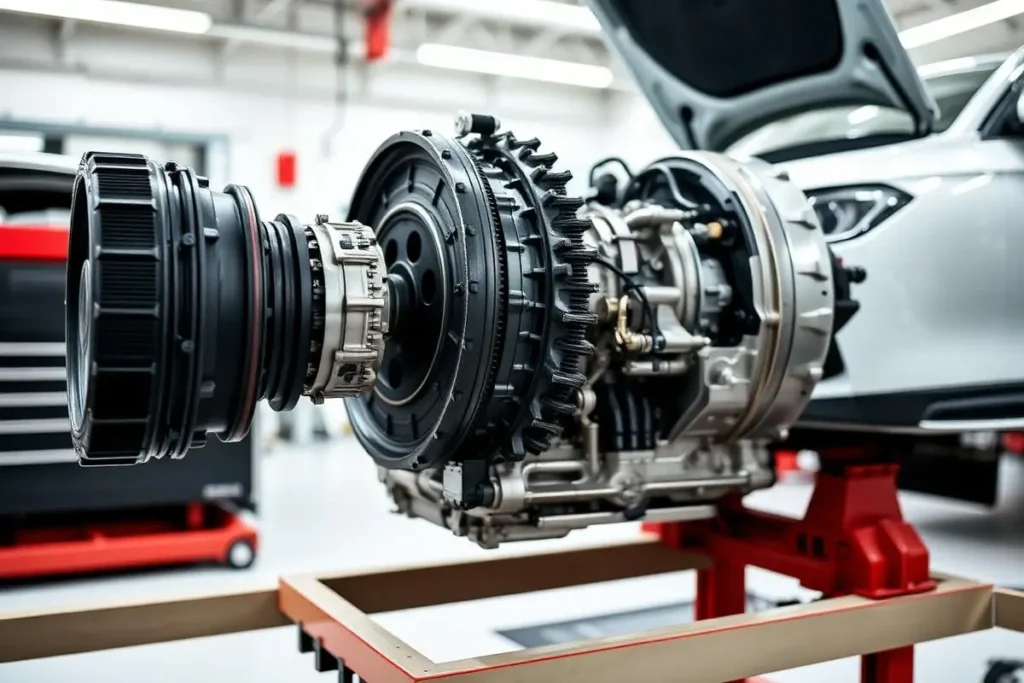
A gearbox rebuild demands operating-theatre cleanliness and precisely specified parts. A single leftover metal particle can lodge in a valve and undo the whole job. So we separate stripping and washing from assembly, and replace every wearing item instead of reusing it.
Once a gearbox is damaged internally, a fluid change will not help. We remove it, inspect and photograph the internals, then agree what gets replaced before rebuilding.
A gearbox rebuild demands operating-theatre cleanliness and precisely specified parts. A single leftover metal particle can lodge in a valve and undo the whole job. So we separate stripping and washing from assembly, and replace every wearing item instead of reusing it.
01
Before rebuilding we rule out simpler causes: fluid level and condition, internal mechatronic leakage, drifted adaptation values, or a sensor fault. We measure line pressures, log data on a road test, and analyse what sticks to the pan magnets — the type of debris itself indicates which component is wearing. Many cases are solved without a full strip, and we tell you plainly when that is the case.
02
The unit is fully stripped, parts washed and checked visually and by measurement: clutch packs, seals, pistons, bearings and valve body spools. The complete gasket and seal set is replaced, the valve body cleaned or replaced by condition, and the torque converter inspected and replaced when needed — refitting a tired converter to a rebuilt gearbox brings the problem straight back.
03
Assembly follows specified torques and measured clearances, then the unit is filled with the correct fluid at the right temperature. After fitting we reset adaptation values and run the on-road learning procedure until shift points settle, then re-read pressures and temperatures to confirm. The car is handed over after a real road test, not just an idle run in the bay.