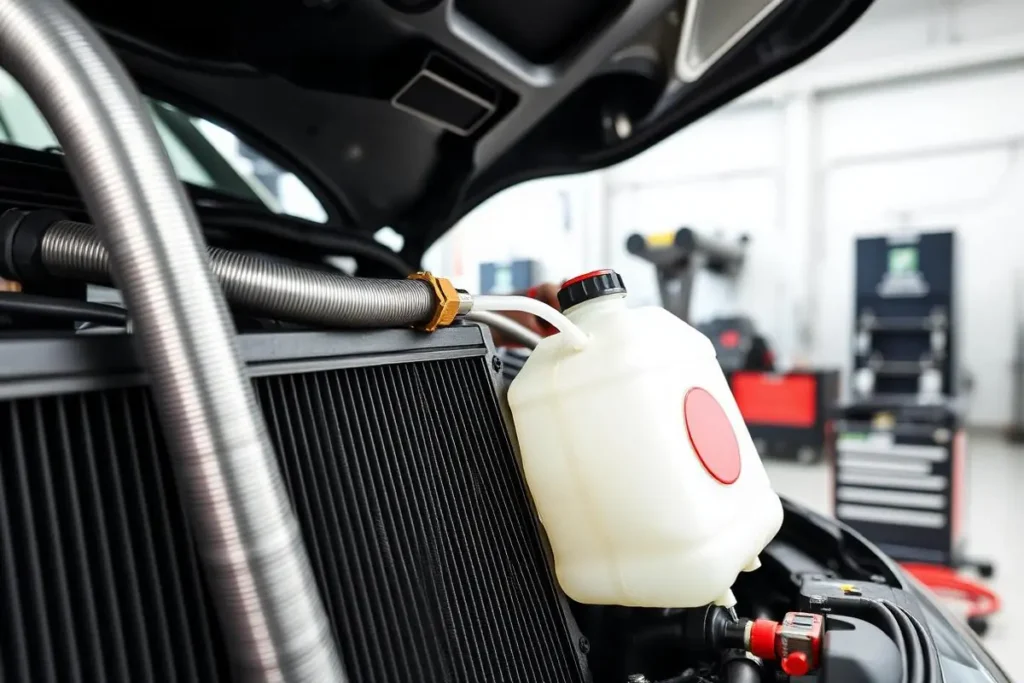
A cooling system in Riyadh runs near its upper limit for most of the year. Overheating is not a fault in itself but the result of a break somewhere in the chain: radiator, thermostat, pump, fan, pressure cap or expansion tank. Ignoring it for one hour can cost a cylinder head.
Overheating in Riyadh is not a small matter — it is the fastest route to head and engine damage. We pressure-test and pinpoint leaks before they become major failures.
A cooling system in Riyadh runs near its upper limit for most of the year. Overheating is not a fault in itself but the result of a break somewhere in the chain: radiator, thermostat, pump, fan, pressure cap or expansion tank. Ignoring it for one hour can cost a cylinder head.
01
We pressure-test the circuit for external and internal leaks, watch thermostat opening and radiator inlet/outlet temperatures, and verify fan operation across its speeds through the tester. We also test for exhaust gases in the coolant — a head gasket sign — and check radiator fin cleanliness, since dust alone measurably reduces cooling.
02
Each marque specifies a coolant with a particular corrosion-inhibitor package, and mixing types creates deposits that block the fine passages in the radiator and oil cooler. Using plain water in Riyadh is a common mistake: it lowers boiling protection and accelerates corrosion. We drain, flush where needed, refill with the approved type at the correct ratio, then vacuum-fill to purge air, because a single air pocket causes intermittent overheating.
03
The best time to check cooling is before summer, not during it. We inspect hoses for hardening and swelling, the pressure cap that quietly loses its rating, the expansion tank that cracks with heat, and the water pump for play or early weeping. These are short checks that prevent a breakdown on an open road on a 40-degree day.