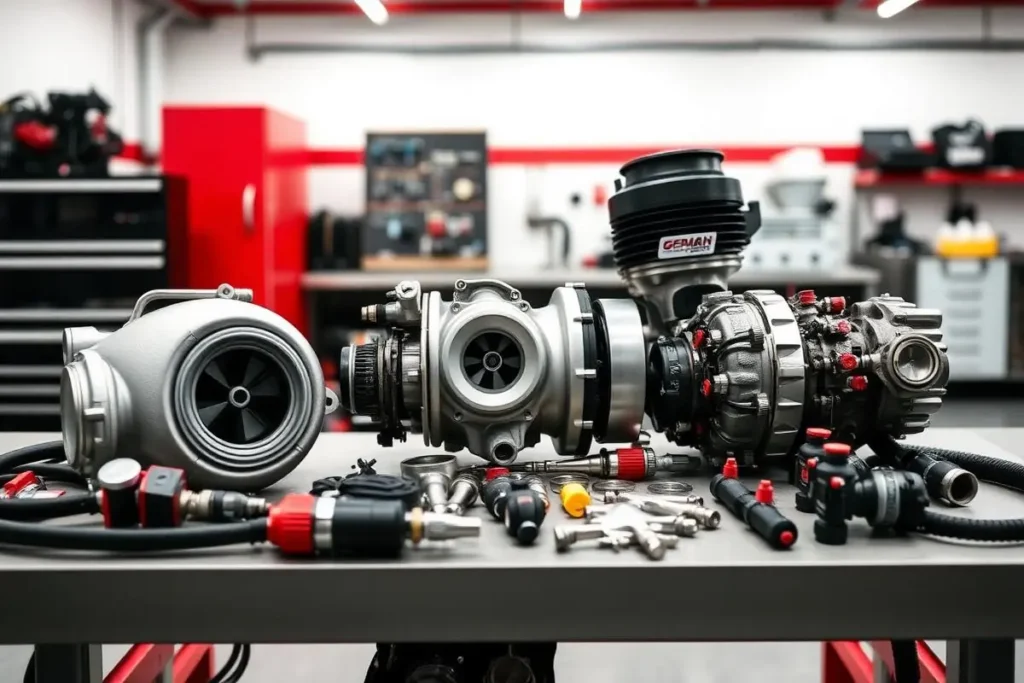
The turbo and fuel system together define an engine's character. Any fault here shows immediately in response: hesitation on throttle, torque loss, an unusual whistle, or higher fuel consumption. Most turbo failures do not start in the turbo itself, but in the oil supply, the air path or the sensors around it.
Low boost can come from a small air leak, a wastegate or dirty injectors — and the cost difference is large. We measure boost and check the whole path before replacing a turbo.
The turbo and fuel system together define an engine's character. Any fault here shows immediately in response: hesitation on throttle, torque loss, an unusual whistle, or higher fuel consumption. Most turbo failures do not start in the turbo itself, but in the oil supply, the air path or the sensors around it.
01
Before condemning a turbo we check the oil feed and return lines, since blockage or coking destroys bearings quickly. We also look for boost leaks after the turbo, test the wastegate or variable-geometry vanes that stick with carbon, and read actual versus requested boost. Many "weak turbo" cases are resolved by cleaning, an actuator repair or a split hose.
02
On direct-injection engines a dirty or leaking injector changes the spray pattern, causing rough running, cylinder imbalance, black smoke and higher consumption. We test per-cylinder fuel correction, measure rail and high-pressure pump output, and check each injector's contribution individually before proposing work. Sometimes the answer is cleaning and coding; sometimes a single injector.
03
Direct injection does not wash the intake valves with fuel as older systems did, so carbon builds up and gradually chokes airflow. The result is a slow torque loss the driver does not notice until it is large. We clean the valves by the method appropriate to that engine, replace the fuel filter at the correct interval, and explain the real effect of fuel quality on these engines without exaggeration.