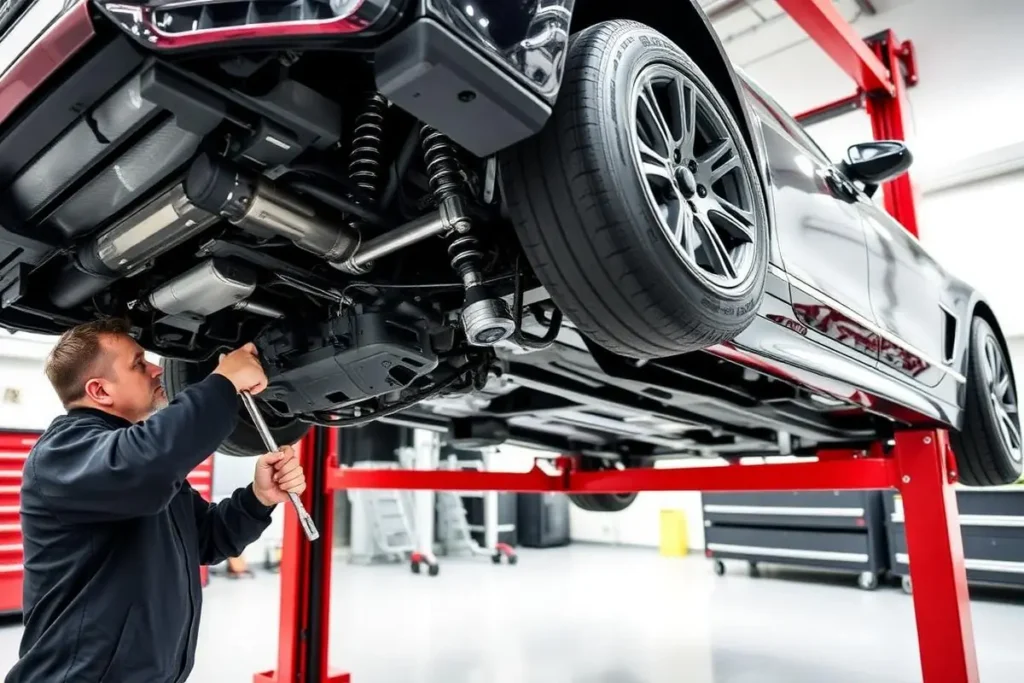
Mechanical repair is the everyday work that keeps a car dependable: leaks, mounts, pumps, belts, pulleys, hoses and noises whose source the owner cannot place. This work does not need heroics — it needs organised inspection, hands used to these specific marques, and spec-correct parts fitted to the required torque.
Everyday mechanical work is what keeps a car alive. We explain each part we recommend and why, and give you the choice between genuine and approved alternatives with prices and differences.
Mechanical repair is the everyday work that keeps a car dependable: leaks, mounts, pumps, belts, pulleys, hoses and noises whose source the owner cannot place. This work does not need heroics — it needs organised inspection, hands used to these specific marques, and spec-correct parts fitted to the required torque.
01
We start from your description: when does it appear — cold or hot, under acceleration or over bumps, with the A/C on or off? Then we reproduce that condition in the workshop and use a stethoscope to isolate the source among pulleys, pumps and mounts. This order saves labour hours and avoids replacing healthy parts just because they "usually make that noise".
02
Vibration at idle or on engagement usually relates to engine or gearbox mounts, some of which are hydraulic and lose performance as they empty without looking damaged. We test them under real load and compare vibration in different modes. Conversely, vibration tied to road speed points to tyres, driveshafts or brakes — a distinction we settle before any money is spent.
03
We use genuine parts or OEM-supplier equivalents and state the type in the report before work begins. Fitting is done to specified torque, with new bolts where the manufacturer requires them — small details that separate a lasting repair from one that returns in months. When finished we road-test the car to confirm the symptom you came for is gone.