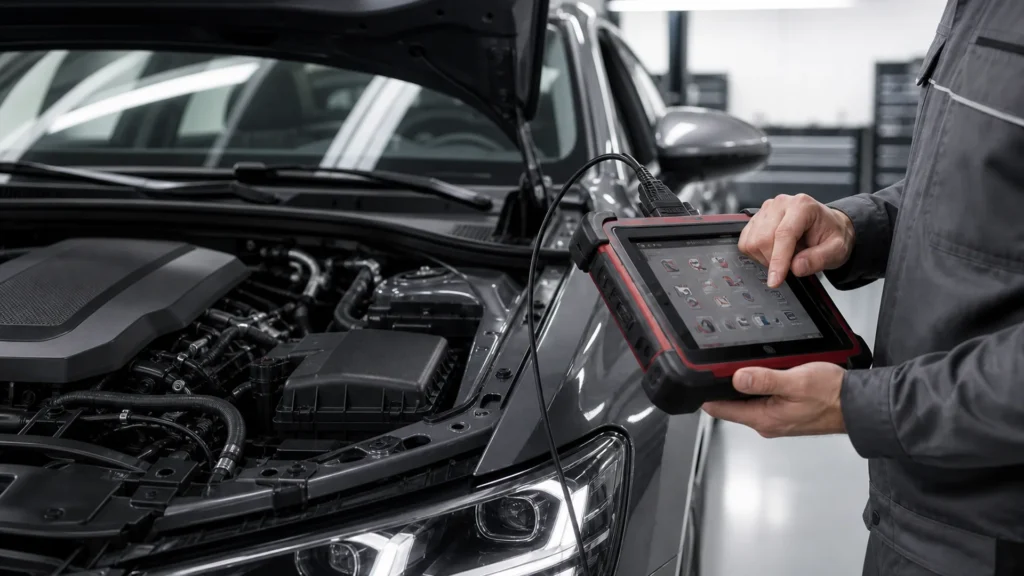
Diagnostics on a modern European car is not plugging in a tool and reading a number. Dozens of modules talk to each other over an internal network, and a fault can surface in one module while its real cause sits in another or in the wiring between them. We scan the whole network, log live data while the engine runs and while the car drives, then compare it with the factory values for that exact model before telling you what needs work.
A stored code points to where the fault is, not always to the failed part. We read live data and compare it against factory values before judging any component — which saves you replacing healthy parts.
Diagnostics on a modern European car is not plugging in a tool and reading a number. Dozens of modules talk to each other over an internal network, and a fault can surface in one module while its real cause sits in another or in the wiring between them. We scan the whole network, log live data while the engine runs and while the car drives, then compare it with the factory values for that exact model before telling you what needs work.
01
We start from the VIN to fix the generation and options, then run a full scan across every module: engine, transmission, brakes, airbags, climate, network and comfort units. Stored and intermittent faults are logged with their freeze-frame conditions — a detail many skip although it does half the work. Then we move to live data: oxygen sensor readings, fuel rail pressure, cam angles, short and long term fuel trims, oil and gearbox temperatures.
02
A code like "oxygen sensor out of range" can come from the sensor itself, from an air leak after the mass air flow meter, from a leaking injector, or even from a fuel cap that does not seal. The difference between a workshop that guesses and one that measures is this step: we test the circuit for voltage and resistance, use a smoke machine for air leaks, and run a compression test when needed. Replacement follows measured evidence, not a screen reading.
03
Many parts on modern cars do not simply work once fitted: a battery must be registered by type and capacity, a brake module needs initialisation, cameras and screens need calibration, and a gearbox needs adaptation after service. We code and update with the manufacturer software where required, then rescan so the car leaves with a genuinely clean fault memory, not one that was merely erased.